St John of Damascus
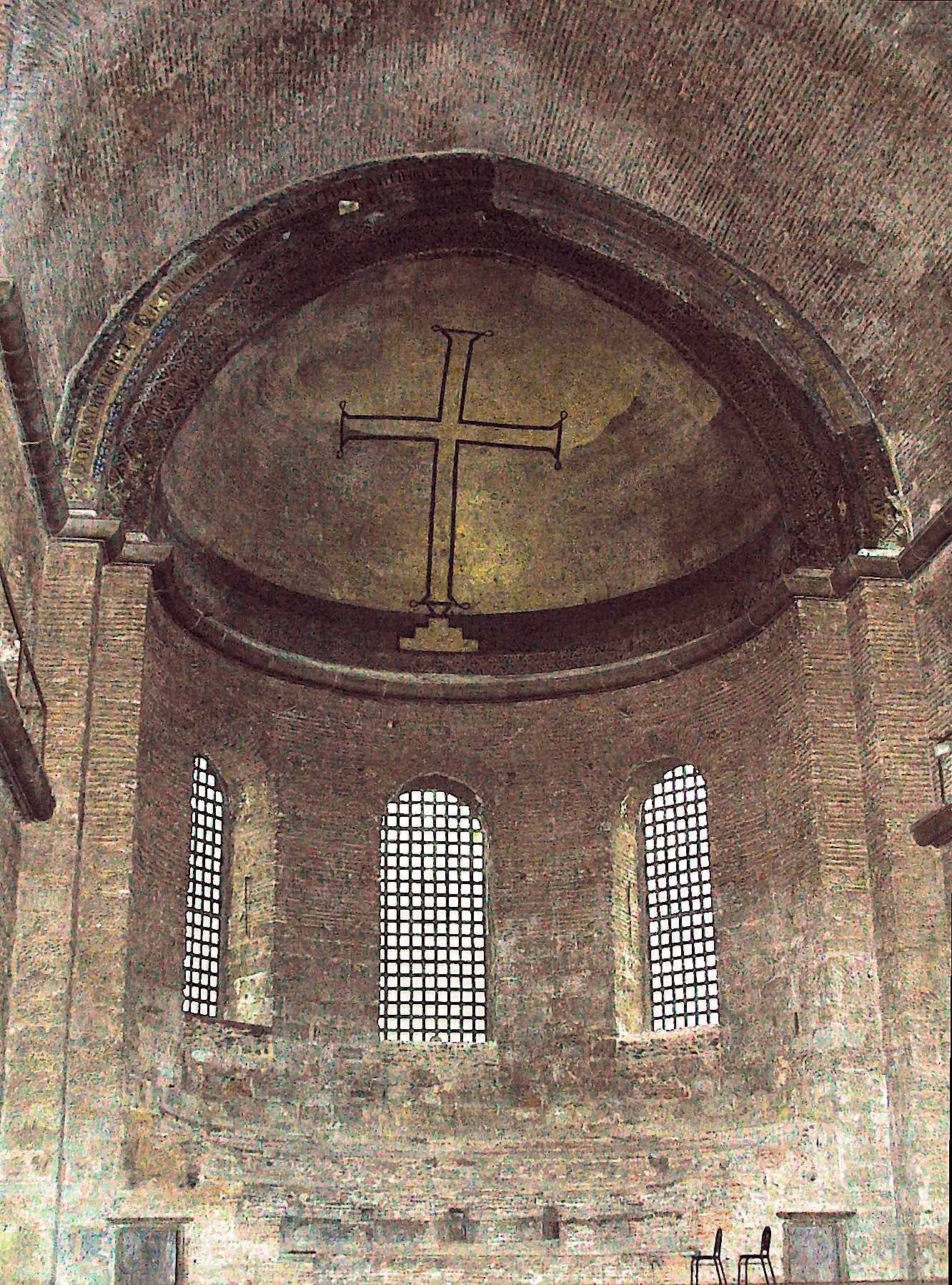 |
A simple cross: example of iconoclastic art in the Hagia Irene church in Istanbul |
S
t John of Damascus (c. 675–749) was a gifted theologian and hymnographer. His writings became decisive in defending the veneration of holy icons. During the 8th and 9th centuries, the Byzantine Empire was torn by the iconoclast controversy. Emperors ordered icons to be removed and destroyed, fearing they led believers into idolatry. This happened in two great waves, from 726–787 and again from 814–842.
John wrote at a crucial moment, just before the first wave of destruction began. He argued with clarity and courage. In his first treatise against those who rejected sacred images, he wrote:
“Of old, God the incorporeal and formless was never depicted, but now that God has been seen in the flesh… I depict what I have seen of God. I do not venerate matter; I venerate the Fashioner of matter, who became matter for my sake… and through matter worked my salvation.” (Treatise 1.16)
For him, the distinction was crucial: we venerate, but we do not worship icons. Worship belongs to God alone. Veneration simply honors what God has revealed through His saints and, above all, through the Incarnate Word. Icons are not objects of worship; they are windows that point us toward the heavenly reality they represent.
John insisted that matter is good because God created it. Scripture tells us that everything God made is good, including our bodies and the physical world. The problem is not matter itself, but our misuse of it. The answer is not to destroy material things as if they were unholy, but to allow creation to reveal its Creator.
In On the Divine Images, John argued that the Incarnation changed everything. We can portray Christ and His saints because God Himself became visible.
John’s defense laid the foundation that later helped the Church restore icons at the Second Council of Nicaea in 787. The Council affirmed that icons may be venerated—but never worshipped. His legacy shaped Christian worship and gave a theological foundation for the beauty of sacred images.
The second contribution of St John of Damascus is his teaching on the Dormition of the Virgin Mary which shaped the Church’s understanding of her being taken into heaven. No wonder he is also honored as the Doctor of the Assumption. In his homilies, Mary does not die from sickness or decay, but out of a burning love for her Son. She chooses death not as a punishment, but as an act of obedience and union with Christ, the Lord of Life. John calls her passing a “deathless death,” a sleep that opens into divine life. This teaching remained so enduring that over a thousand years later, Pope Pius XII quoted John of Damascus when he declared the Assumption a dogma in 1950. Thus, the defender of icons also gave the Church one of its most tender visions of Mary—a woman whose love was so complete that even death became a doorway into glory. Through John’s faith and poetry, the Church sees Mary not as escaping human weakness, but showing us the destiny prepared for all who love Christ: where death is transformed into life, and creation reveals its Creator. Fr JM Manzano SJ

Comments
Post a Comment
Thank you for your interest in the above post. When you make a comment, I would personally read it first before it gets published with my response.