Kintsugi of the Heart: How the Ignatian Retreat Restores Our Broken Pieces
 |
by Taz Pollard, photography by Samantha Toolsie, Jim Jones and Molly Chesworth https://americana-uk.com/small-town-jones-kintsugi |
T
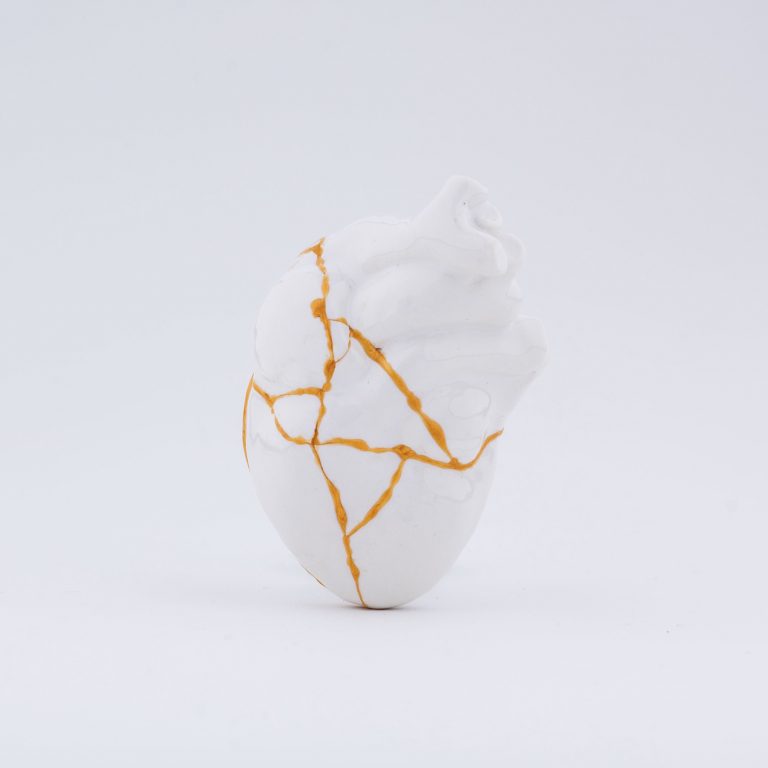
oday, I would like to describe the process of an Ignatian retreat using the image of kintsugi (golden joinery). This Japanese art of repairing broken pottery goes beyond mere repair—it is the art of fullness spilling through the cracks.
The first step in restoring a broken ceramic piece is to clean it carefully. In the same way, the retreat begins with a gentle purification of the heart. Through silence, prayer, and the Examen, we begin to clean both the inside and the outside of our lives—our thoughts, memories, and attachments. We are careful not to rush over the fractures. The wounds of our lives must not be ignored or hastily covered, because they are precisely the places where God’s grace will later work most deeply.
Next, the broken pieces must be examined. We look closely at the fragments and discern which pieces should be joined first so that the whole will eventually fit together. In the retreat, this resembles the slow work of discernment. With the help of a guide, the retreatant revisits the different pieces of one’s life—relationships, desires, choices, wounds, and graces. Nothing is forced into place. Like using masking tape to test the fit, we patiently explore how the pieces of our story may come together under God’s gaze.
Once the order becomes clear, the pieces are prepared for joining. In the retreat, this moment corresponds to the grace of deeper understanding: we begin to see how God has been present even in the broken parts of our history. It is not just in the exterior on the level of the vessel's perfection but more in the vessel’s fullness truly hidden (vere latitat) yet revealed in its cracks.
Then comes the adhesive. In kintsugi, the glue is carefully mixed, often with gold powder. The mixture must be balanced and prepared with care. In the spiritual life, this “adhesive” or mortar is the grace of God working through prayer, Scripture, and spiritual conversation. It is not something we manufacture ourselves. Rather, we allow God’s grace to bind the fragments of our lives together.
The adhesive is then applied along the fractures of the broken pieces. This is done gently and only where the pieces are meant to join. Like in a puzzle, a piece only makes sense when it fits where it belongs. In the retreat, God’s grace touches precisely the edges and faults of our hearts. The result is a graced history revealed more clearly only after we have connected the dots of the pleasant and unpleasant experiences. This grace is also the interior sight that looks at the broken eggshell and understands that its shattering is the sign that life has come forth.
After the pieces are joined, they must remain still for a time while the glue hardens. This moment of stillness is essential. In the Ignatian retreat, silence and patience play the same role. The retreatant waits, allowing God’s work to settle deeply within the heart. Transformation cannot be rushed.
Only when the first pieces have firmly held together do we proceed to the next. In the same way, the retreat unfolds step by step through the movements of the Spiritual Exercises—beginning with conversion, moving through the contemplation of Christ’s life, and culminating in union with God’s love.
In the end, kintsugi does not hide the fractures. Instead, the cracks are "illuminated" with gold, revealing a hidden beauty or glory that has already been there all along. So too in the Ignatian retreat: our brokenness is not erased but given new meaning despite the brokenness. Kintsugi is an illuminative art, akin to private revelation that reveals or discloses what lies hidden in the brokenness. Kintsugi as a powerful medium simply shows this truth more quickly, more clearly and more "sensibly." The Ignatian retreat is a similar passionate medium that allows the exercitant to "see." The medium is the message—the how: how a person reaps the fruit by tasting and relishing the truth interiorly. As St Ignatius says in the Second Annotation, “It is not much knowledge that fills and satisfies the soul, but the interior understanding and relish of the truth.”
This insight about brokenness and restoration has also found its way into contemporary music. One contemporary voice that captures this same insight is the singer-songwriter Jim Jones. He returned to recording after several years away from the studio. In his music, he draws deeply from his own life story. His songwriting is shaped not only by memories of a troubled youth but also by his professional work accompanying young people—as a mentor and someone involved in youth justice—helping them navigate their own broken paths.
In the latest album entitled "Kintsugi," the lyrics of his song “Mr Kintsugi” resonate so strongly the Ignatian Kintsugi Retreat. In a conversation with the therapist (aka shrink), the protagonist begins to see beyond the cracks of his or her own brokenness, Jones writes:
Oh Mr KintsugiWhat gold you speak to meThe brokenness you seeIs all part of the beauty, Mr Kintsugi
In Wind, Sand and Stars, Antoine de Saint-Exupéry writes, "Perfection is achieved, not when there is nothing more to add, but when there is nothing left to take away, when a body has been stripped down to its nakedness." In this light, the cracks become pathways to knowing the self completely, inside out, until nothing remains concealed. If we allow God to painstakingly work and reveal them at the right moment, a one-of-a-kind beauty emerges that could not have appeared any other way. St Augustine of Hippo writes: “He alone created you... you were created whole... you are continually being created and preserved.” What once looked like jagged pieces become the very "touchstone" stories of grace where God’s healing touch is manifestly made beautiful. It is only through such work of grace that a ceramic ware can turn into a coveted gem of a masterpiece. Fr JM Manzano SJ
PS: Available in this link is a free music streaming of the Small Town Jones: Kintsugi new album.

Comments
Post a Comment
Thank you for your interest in the above post. When you make a comment, I would personally read it first before it gets published with my response.